Rhinoplasty

Rhinoplasty in Olympia, Washington
Refine Your Nose While Preserving What Makes You UniqueRhinoplasty, commonly called a “nose job,” is a highly personalized surgical procedure that can improve the shape, proportion, symmetry, or function of the nose. At Pearl Plastic Surgery, our goal is not to give every patient the same nose. We carefully tailor each procedure to complement the patient’s natural facial features and create a balanced, authentic result.
Whether you are bothered by the appearance of your nose, have difficulty breathing, or would like to correct changes caused by an injury or previous surgery, our team will develop a thoughtful surgical plan based on your anatomy and goals.
-
A prominent bump along the bridge of the nose
A nose that appears too large or too small for the face
A wide, narrow, crooked, or asymmetrical nasal bridge
A bulbous, drooping, elevated, or poorly defined nasal tip
Wide or asymmetrical nostrils
Changes caused by trauma or a prior nasal fracture
Breathing difficulties related to internal nasal anatomy
An unsatisfactory result from a previous rhinoplasty
During your consultation, we will discuss which concerns can realistically be improved while preserving appropriate nasal support and function.
-
Come prepared to discuss any questions you may have during the consultation as well as:
•Your goals for surgery
•Current medications, allergies, drug use, smoking and alcohol consumption
•Personal and family health history such as diabetes, cancer, anemia, lung or heart problems
•Previous surgeriesDuring the consultation we will:
•Examine your face and skin tone
•Discuss incision sites and downtime
•Evaluate your overall health and any pre-existing health conditions
•Take pre-op photos
•Discuss how the procedure is performed and what your likely outcome will be
•Talk about any risks or potential complicationsPrior to your surgery we may ask you to:
•Pick up any medications needed for after your surgery
•Stop smoking
•Avoid taking anti-inflammatory drugs that can increase bleeding
•Have pre procedural testing done if you have pre-existing health conditions -
Rhinoplasty may be a good option if:
You are physically healthy
Your facial growth is complete
You do not smoke or are willing to stop before and after surgery
You have realistic expectations
You are bothered by the size, shape, or proportion of your nose
You have nasal asymmetry or changes related to an injury
You have difficulty breathing due to the structure of your nose
Rhinoplasty is a very personal procedure. It should be performed for yourself and based on your own goals rather than pressure from another person.
-
Rhinoplasty is intended to improve the balance and appearance of the nose, but it cannot create perfect facial symmetry or guarantee a specific result.
The two sides of the face are naturally different, and some degree of asymmetry may remain after surgery. Rhinoplasty also cannot correct every cause of nasal congestion or breathing difficulty.
The goal is improvement that looks natural and complements your existing facial features, not to give every patient the same nose.
-
Cosmetic rhinoplasty focuses on improving the appearance, proportion, and shape of the nose.
Functional rhinoplasty focuses on improving airflow when breathing difficulty is related to the internal support or structure of the nose. In some cases, cosmetic and functional concerns can be addressed during the same procedure.
A physical examination is necessary to determine which changes may be appropriate for you.
-
Open Rhinoplasty
During an open rhinoplasty, incisions are placed inside the nostrils with an additional small incision across the tissue between the nostrils. This provides greater access to the underlying cartilage and bone and may be recommended when more extensive reshaping is required.
Closed Rhinoplasty
During a closed rhinoplasty, the incisions are placed entirely inside the nostrils. This technique may be appropriate when more limited changes are needed.
The nasal bone and cartilage may be reshaped, reduced, repositioned, or supported depending on your anatomy and goals. Cartilage grafting may be used when additional structure or support is needed.
The recommended approach will be discussed during your consultation.
Anesthesia
Our anesthesia team will meet with you on the day of your procedure to review your anesthesia plan. Rhinoplasty is generally performed under general anesthesia at our on-site surgical facility.
-
ItemAfter surgery, a splint may be placed on the outside of the nose to protect and support its new shape during early healing.
Swelling, congestion, pressure, and bruising around the nose and eyes are common during the first several days. Most patients take approximately one to two weeks away from work and social activities, depending on the extent of surgery and the type of work they perform.
You will need to avoid strenuous exercise, heavy lifting, pressure on the nose, and activities that could result in an injury while healing.
Although much of the visible swelling improves during the first several weeks, the nose will continue to change and refine over time. Swelling at the nasal tip may take several months to fully resolve, and final results may take a year or longer to develop. description
-
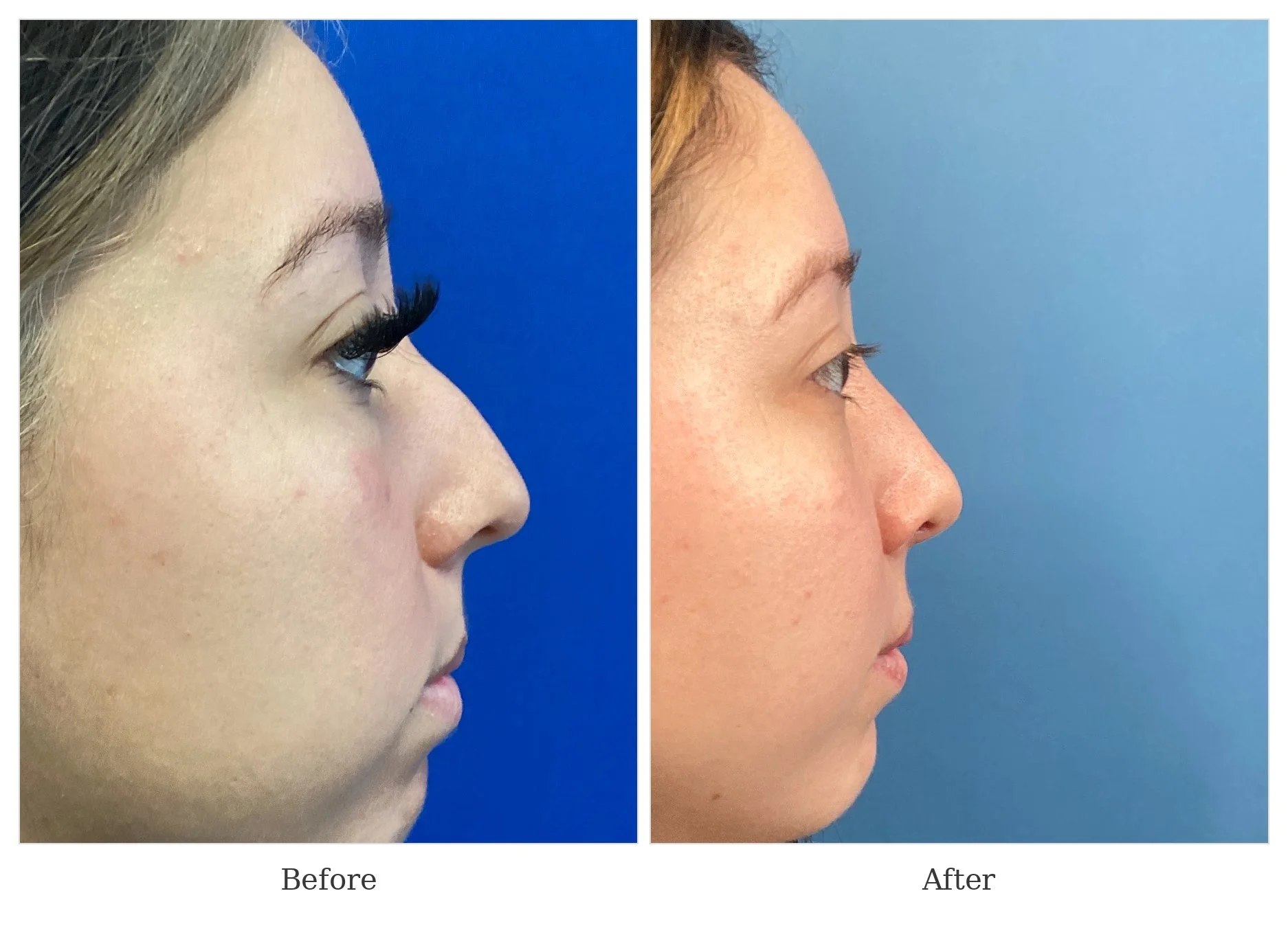
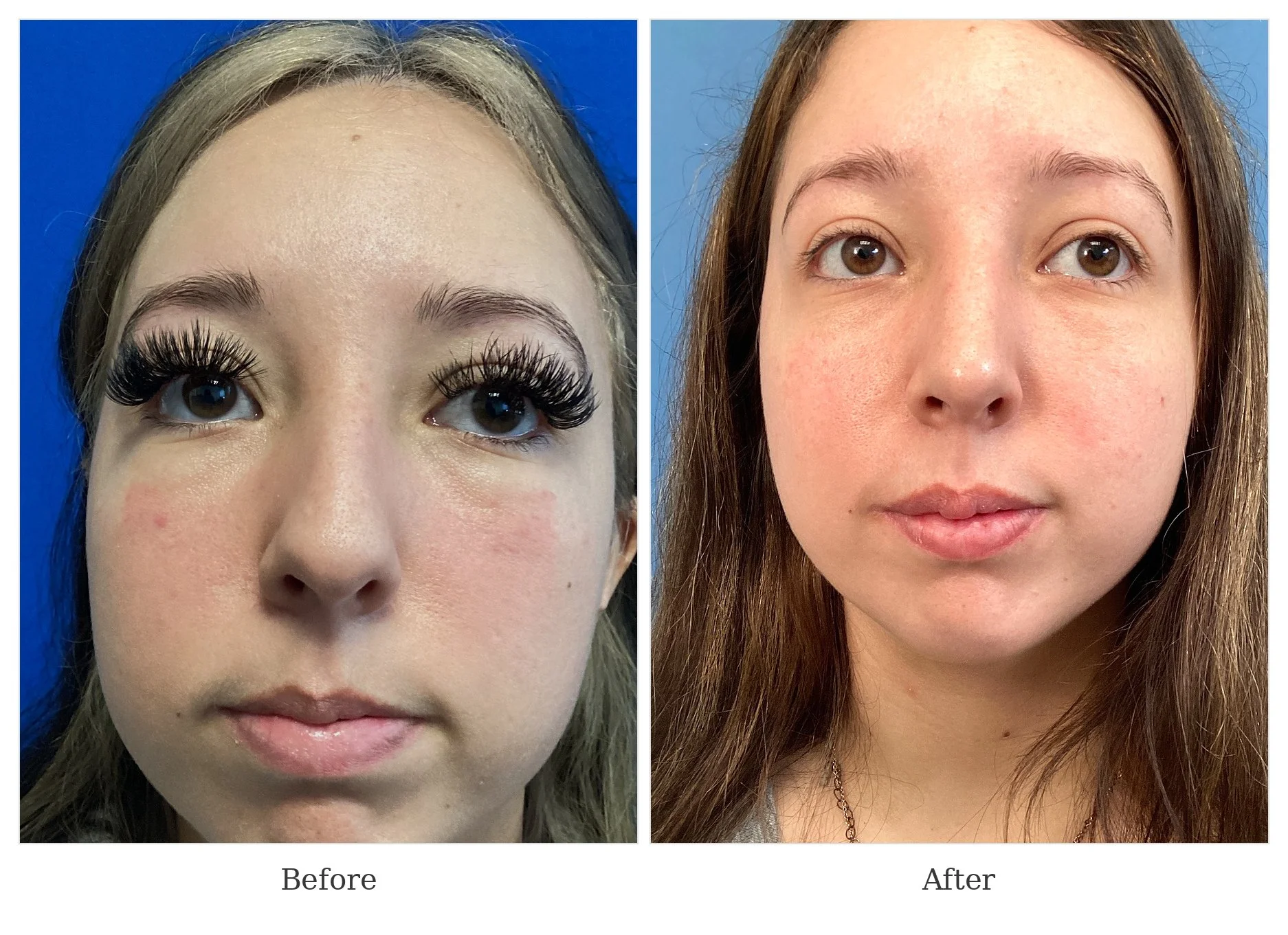
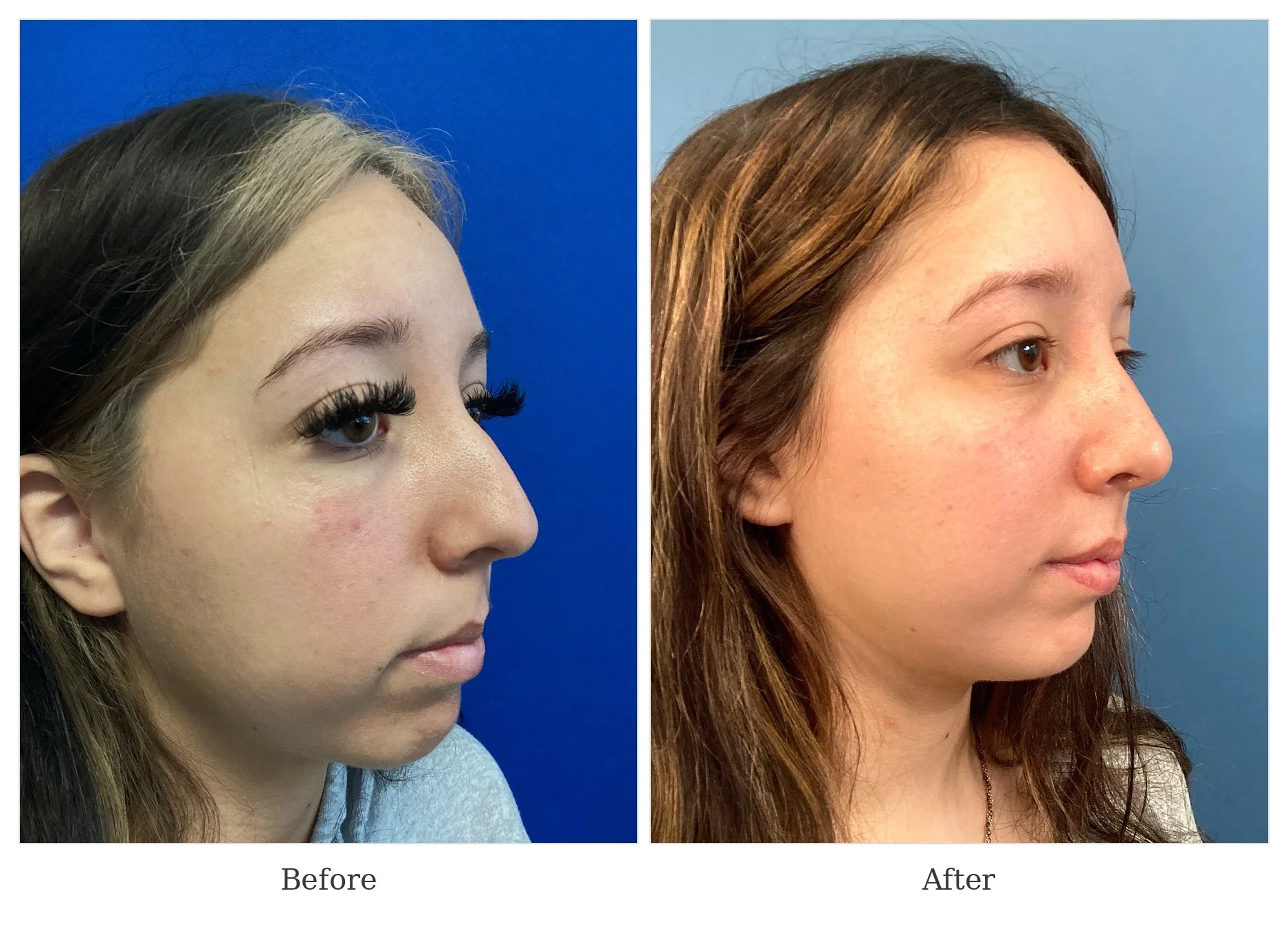
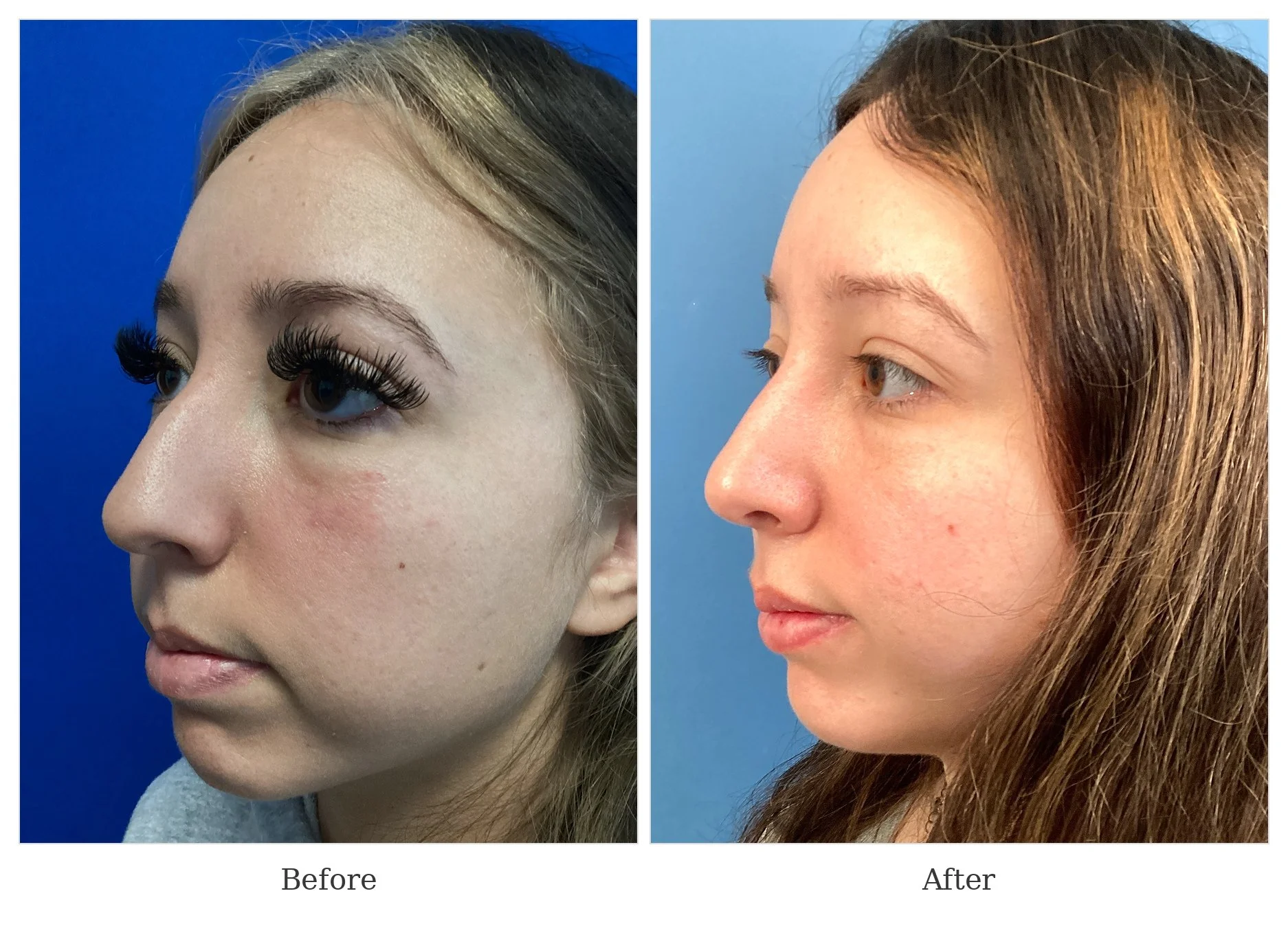
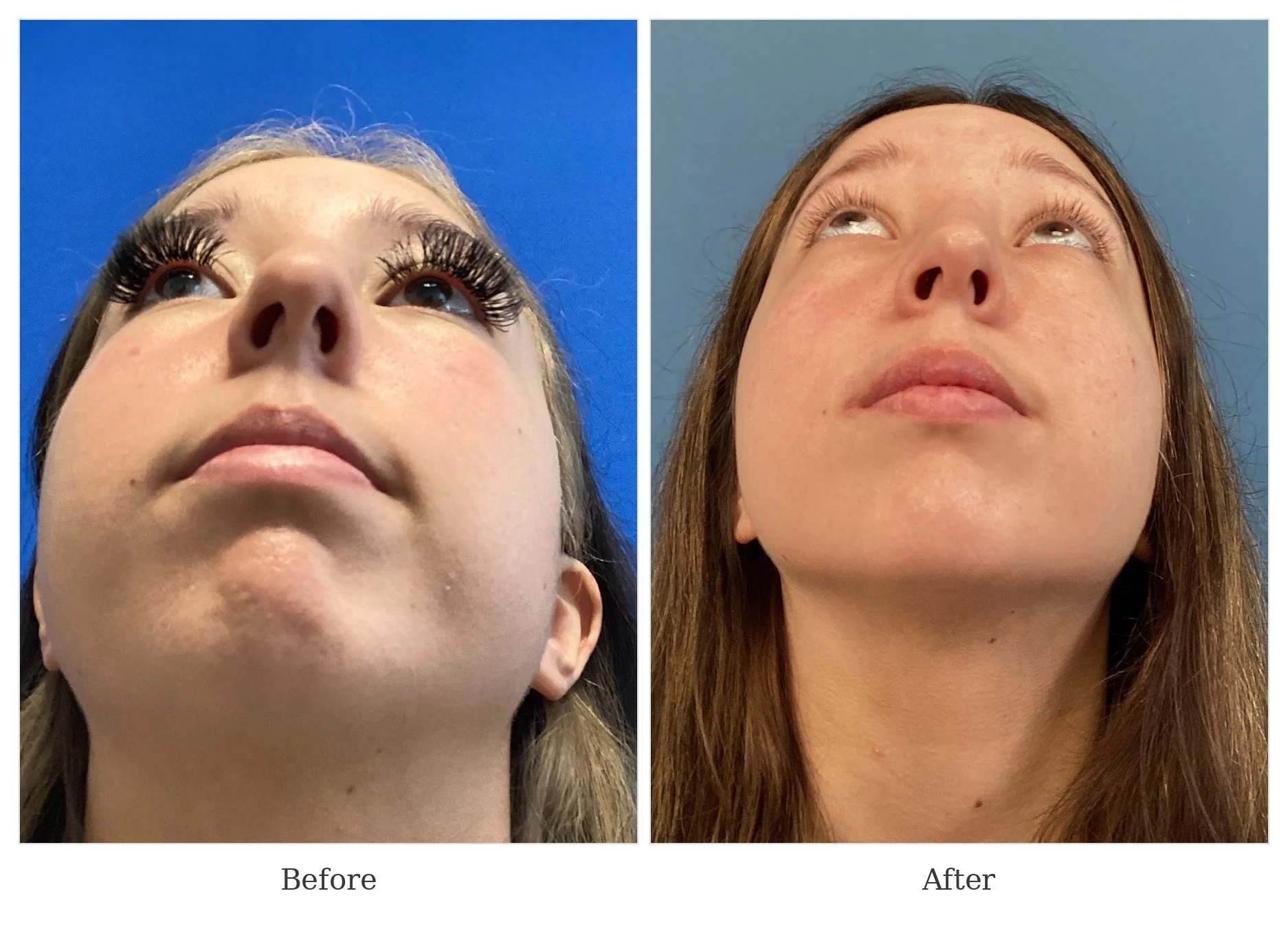
Rhinoplasty can create long-lasting improvements in the shape and proportion of the nose. Results should appear balanced with the rest of your facial features and look natural from multiple angles.
The outcome of surgery depends on several factors, including:
Your nasal anatomy
Skin thickness
Bone and cartilage structure
Previous injuries or surgeries
Healing characteristics
The changes being requested
Your surgeon will discuss what can safely and realistically be achieved based on your individual anatomy.
-
As with any surgical procedure, rhinoplasty has potential risks. These may include:
Bleeding
Infection
Scarring
Delayed healing
Changes in skin sensation
Persistent swelling
Nasal asymmetry
Contour irregularities
Difficulty breathing
Changes in smell
Septal perforation
Unsatisfactory appearance
Need for revision surgery
The risks, benefits, alternatives, expected recovery, and limitations of rhinoplasty will be discussed in detail during your consultation.escription
-
Your consultation at Pearl Plastic Surgery will include a review of your concerns, medical history, breathing symptoms, previous nasal injuries or surgeries, and desired outcome.
Your surgeon will examine your nasal structure and facial proportions and discuss the surgical options that may best help you achieve your goals.
Schedule a complimentary phone call with our Patient Care Coordinator to learn more about rhinoplasty, estimated pricing, recovery, and the consultation process.
Schedule a Consultation